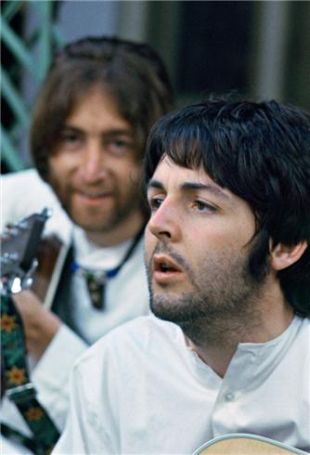
John Lennon, background, and Paul McCartney, working on their music in Rishikesh, India during a 1968 visit there with the Maharishi Mahesh Yogi. The song, ‘Dear Prudence,’ about a woman in the group there, Prudence Farrow, was written by John Lennon.
The Beatles and the Farrow sisters were part of a larger group who were then visiting the Maharishi Mahesh Yogi on a weeks-long retreat in Rishikesh, India. It was February-March 1968.
Prudence Farrow, then focused on learning transcendental meditation (TM), stayed in her room for long periods of time. Lennon, worried she was depressed, wrote the song “Dear Prudence,” inviting her — as his lyrics would say — to “come out to play.”
“All the people around her were very worried about the girl,” Lennon would later say. “…So, we sang to her.” Lennon and George Harrison were delegated by the group to help bring Prudence out, as she had held up in her room for some time. Farrow was intent on learning the TM technique well enough to be able to teach it herself.
“I would always rush straight back to my room after lectures and meals so I could meditate,” she would later explain. “John, George and Paul would all want to sit around jamming and having a good time and I’d be flying into my room. They were all serious about what they were doing, but they just weren’t as fanatical as me…”
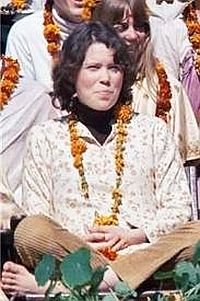
Prudence Farrow in India.
Music Player
“Dear Prudence” — 1968
The resulting song, in any case, is quite beautiful musically; with finger-picking guitar featured prominently throughout, along with some very nice, harmonic Beatle vocals. The song’s lyrics offer simplicity and innocence while praising nature’s beauty:
“…The sun is up, the sky is blue, it’s beautiful, and so are you…”. Lennon is said to have considered it one of his favorite Beatles songs, and his son Julian has also named it his favorite.

Cover of Beatles’ EP which includes BBC broadcast hit, “All You Need is Love.”
In the time period leading up to and including the Beatles’ trip to India — 1967-1968 — there had already been, and would continue to be, significant change in both the Beatles’ musical growth as well as the social and political setting of those times. The Beatles by then were nearly four years removed from the hysteria of the earlier “Beatlemania” that had prevailed in 1963-1964. They had also produced by then more complex and interesting music, adding the album Rubber Soul in December 1965 followed by Revolver in 1966. And just as the “summer of love” was taking form in San Francisco in 1967 — ushering in the hippie-counterculture movement — the Beatles produced a highly innovative new album, Sgt. Pepper’s Lonely Hearts Club Band, released in June 1967. The Beatles’ music gained global reach in the sum- mer of 1967, after they were featured in the first live, satellite-fed, global TV broadcast singing “All You Need is Love.” That same month, the first live, satellite-enabled global television link occurred when the BBC in London featured the Beatles and others in a June 25th studio performance of the song “All You Need Is Love.” The BBC’s production, which included a longer two-hour show linking 26 nations entitled Our World, had the largest television audience ever up to that point — some 350 to 400 million people. The most famous segment, however, starred the Beatles plus a 13-piece orchestra performing “All You Need Is Love,” a song written by John Lennon. During the live telecast from the Beatles’ Abbey Road studios, other notable U.K. musicians, including the Rolling Stones’ Mick Jagger and Keith Richards, Eric Clapton, Marianne Faithfull, Keith Moon, Graham Nash, and others joined the Beatles, some singing along. “All You Need is Love” was so well-received that the Beatles released it as a single in the U.K. in early July 1967, where it rose to No. 1 on the U.K. charts, remaining there for three weeks. In the U.S., the song hit No.1 on the Billboard charts August 19th, 1967. The Beatles and their music were then at a peak globally; they were a group attuned to their times, changing music and culture as they went.
The Beatles & India
Not long after the Beatles had performed “All You Need Is Love” on their global broadcast, they met the Maharishi Mahesh Yogi for the first time in London at a lecture. George Harrison and his then wife, former model and photographer Patti Boyd, had become interested in Indian culture. George had discovered the sitar, an Indian musical instrument, and had visited India in the fall of 1966, where he first heard the Maharishi speak. The Beatles, at the time, especially Lennon and Harrison, were looking for more cosmic awareness and had been experimenting with LSD. The Maharishi’s transcendental meditation promised an alternative to hallucinogenic drugs.
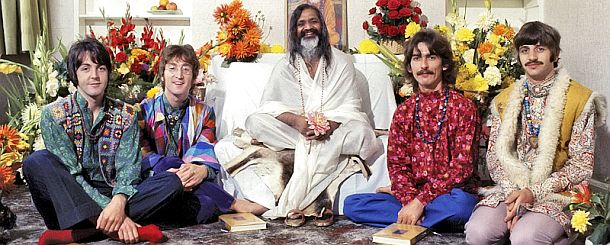
The Beatles with the Maharishi Mahesh Yogi (center) sometime before their trip to India, possibly August 1967, in Bangor, Wales. From left: Paul McCartney, John Lennon, George Harrison, and Ringo Starr.
In late August 1967, the Beatles attended a weekend retreat with the Maharishi in Bangor, Wales. While there, they received news that Brian Epstein, their manager, had died of a drug overdose. The Maharishi helped them through the Epstein tragedy with Hindu philosophy, and in February 1968, the Beatles decided to join him for a retreat at Rishikesh, India, a major center to study yoga.
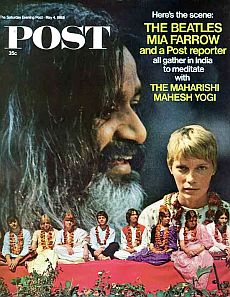
“The Saturday Evening Post” cover story of May 4, 1968 featured the Beatles, Mia Farrow, and others on their retreat in India.
The gathering in India, with all its high-powered celebrity, attracted a press following and a share of newspaper and magazine stories, a number of which appeared in the U.S., the U.K., and elsewhere. The Saturday Evening Post, for example, ran a featured cover story on the trip in its May 4th, 1968 edition, having sent a reporter to go with Beatles to Rishikesh. “Here’s the Scene:,” began the headline on the Post’s cover story. “The Beatles, Mia Farrow and a Post Reporter All Gather in India to Meditate with The Maharishi Mahesh Yogi.” This was actually a two-part story, with the conclusion running in the Post’s May 18th edition.
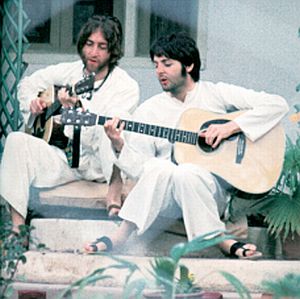
John Lennon & Paul McCartney working on their music in India, Feb-Mar 1968.
The Beatles had planned to make it a three month retreat. However, after about ten days, Ringo Starr returned home, reportedly because he couldn’t deal with spicy Indian food, heading back to the U.K. “for egg and chips,” as one account put it. Paul left soon thereafter, with John and George leaving later. Although the Beatles left the retreat before the course on transcendental meditation was finished, Prudence Farrow, Mike Love of the Beach Boys, and others stayed on and became TM teachers. During the Beatles’ stay, however, they did a fair amount of song writing in their spare time, with McCartney and Lennon getting together frequently to compare notes. “Regardless of what I was supposed to be doing,” Lennon would later say, “I did write some of my best songs there.”
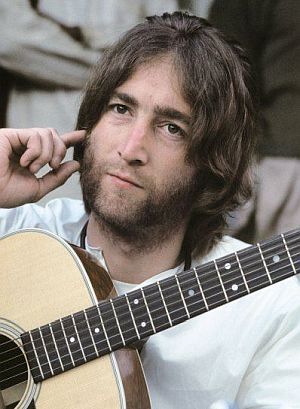
John Lennon penned 'Dear Prudence' while in India, 1968.
One of the original lines in that song, though later changed, went: “Maharishi — what have you done? You made a fool of everyone.”
Other accounts, however, report there was nothing to the allegations about the Maharishi. And some reports say that the Beatles were asked to leave by the Maharishi because of some backsliding on drug use while attending the retreat.
In any case, Beatles historians credit the India trip as a spur to the Beatles’ creativity; reviving their song-writing fortunes. When they returned to England they came home with at least 30 new tunes, in rough form. They then went to work on these, including “Dear Prudence” and other songs that would become the White Album.
“Whatever shortcomings the Beatles’ interaction with the Maharishi may have had,” observed New York Times music reporter Allan Kozinn in 2008, “the experience… seems to have opened a floodgate of creativity and got them out of what threatened to be a creative rut.”
Song & Album
In May 1968, a week before they were to begin work on what would become the White Album, the Beatles gathered at George Harrison’s house in Esher, England. There, they ran through the songs they had worked up in India and made a tape of the ones they would consider for formal recording in the studio. In all, some 30-to-40 songs were at least initially compiled during their trip to India, and many, though not all, would appear on the White Album. Some of the songs would surface years later, including in various bootleg versions.
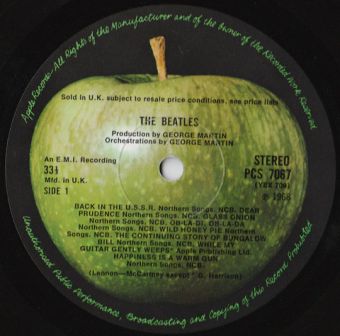
‘Dear Prudence’ appears as the 2nd song on side one of the Beatles two-disc ‘White Album,’ shown here on the Apple record label in its 33.3 rpm vinyl version.
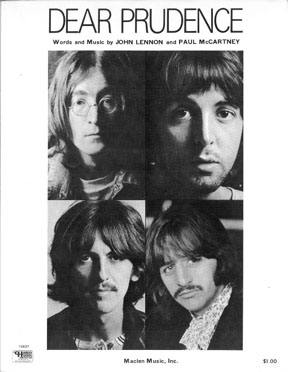
Sheet music cover for the Beatle’s ‘Dear Prudence.’ Click for Amazon link for “The White Album”.
In the U.K., the White Album debuted at No. 1 on December 1st,1968, spending a total of eight weeks at the top of the U.K. charts and holding in the Top Ten for another four weeks. In the U. S., the album debuted at No.11, reaching No. 1 in its third week, spending nine weeks there and remaining on the Billboard 200 album chart for 155 weeks. The White Album sold more than 1 million copies in its first two weeks on the market. In the U.S., it became the Beatles’ all- time best-selling album at “19 times platinum” — i.e., selling 19 million copies and ranking tenth among all best-selling U.S. albums.
“Dear Prudence,” meanwhile, has had its fans over the years, one of whom was fellow musician Jerry Garcia, a founder of the famed Grateful Dead rock group. Garcia is said to have marked the song as one of his all-time personal favorites. Starting around 1979, his Jerry Garcia Band was known to have covered the song regularly at concerts until Garcia’s death in 1995. The song also appeared on the 1991 album, Jerry Garcia Band. The Garcia performance version of “Dear Prudence” — as with much music in “the Grateful Dead tradition” and their 1970s-era style — was often extended and improvised, some exceeding ten minutes.
|
Prudence Farrow After India, Prudence Farrow went on to teach TM for about 37 years. She also received a BA, MA and PhD in South and Southeast Asian studies from University of California at Berkeley and raised three children. There are four grandchildren as well. Prudence Farrow has also worked in film production, with credits including The Muppets Take Manhattan of 1984 and The Purple Rose of Cairo of 1985, with Mia Farrow and director Woody Allen. She also conceived and co-produced the 1994 film Widow’s Peak. In this latter film — set in an Irish town of the 1920s — Prudence’s mother, actress Maureen O’Sullivan, was initially intended to play the role of Miss O’Hare. but she declined due to her advanced age. The part went instead to O’Sullivan’s daughter and Prudence’s sister, Mia. The late Natasha Richardson was also in that film. In June 2015, Prudence Farrow Bruns published a memoir, Dear Prudence: The Story Behind the Song, which covers her Hollywood childhood and her experience with the Beatles in India. |
“Dear Prudence” has also been covered by a range of other groups. English post-punk/ alternative rock band, Siouxsie & the Banshees, released their version of “Dear Prudence” in 1983, a song that became one of that group’s biggest hits, peaking at No. 3 on the U.K. singles chart. In commercial advertising, Cellular South, a wireless phone company based in Mississippi, began using portions of a “Dear Prudence” cover version for a TV commercial in mid-2008.
“Dear Prudence” memorabilia has come to the fore in at least one instance. In 1987, nearly 20 years after the song first appeared, Lennon’s original handwritten copy of the 14 lines of verse from “Dear Prudence,” was sold at auction to an unidentified investor for $19,500.
Prudence Farrow, meanwhile, would work as an elementary school teacher along with her husband, both continuing to practice TM (see box at right). For the Beatles, the trip to India and what had preceded it — including Brian Epstein’s death — began a process of unraveling that would lead to the group’s demise. Although India had provided them with a temporary spur to their musical output, differences and strains within the group had become apparent during the White Album recording sessions; differences that would lead to the Beatles’ break up in 1970. For more about the Beatles’ break up see, “The Paul-Is-Dead Saga, 1969-1970,” which also covers their final days together and the circumstances preceding their dissolution.
Other Beatles and Beatles-related stories at this website include: “Beatles’ Closed-Circuit Gig, March 1964,” “Nike & The Beatles, 1987-1989,” “Nike’s Revolution Ad, 1987-1988″ (video), and “Michael & McCartney, 1980s-2009.”
See also, “Beatles History,” a topics page with additional story choices. Thanks for visiting – and if you like what you find here, please make a donation to help support the research and writing at this website. Thank you. – Jack Doyle
|
Please Support Thank You |
_____________________________
Date Posted: 27 July 2009
Last Update: 25 June 2019
Comments to: jackdoyle47@gmail.com
Article Citation:
Jack Doyle, “Dear Prudence, 1967-1968,”
PopHistoryDig.com, July 27, 2009.
______________________________
Beatles Music at Amazon.com…
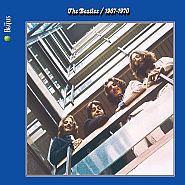 The Beatles: 1967-1970, “The Blue Album,” 28 songs. Remastered. Click for Amazon. |
 “The Beatles 1,” Remastered (2000), 27 songs. Click for Amazon. |
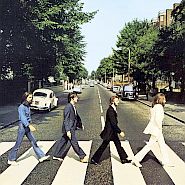 The Beatles, “Abbey Road” album, Remastered (2009). 17 songs. Click for Amazon. |
Sources, Links & Additional Information
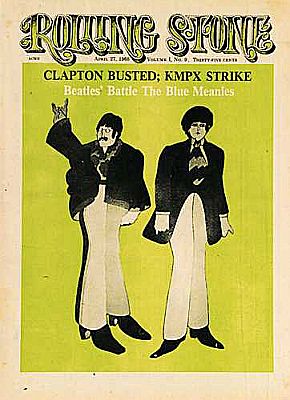 In 1968, the Beatles also released their animated film, ‘Yellow Submarine,’ previewed above with two Beatle characters on an early cover of a new music magazine named ‘Rolling Stone’– this being the magazine’s 9th issue of April 27, 1968. |
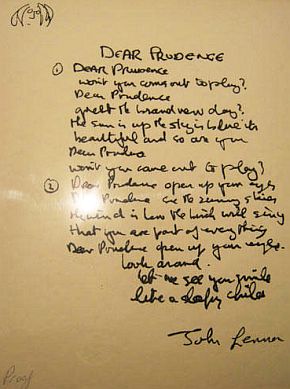 A silkscreen print copy of John Lennon’s hand-written “Dear Prudence” lyrics. The original was sold at auction in 1987. |
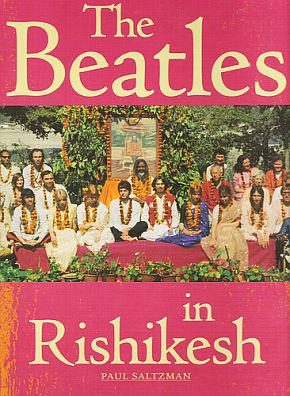 “Beatles in Rishikesh,” book by photographer Paul Saltzman, featuring 75 photos and anecdotes on the Beatles and others at the retreat, Penguin Studio Books (hardback), October 2000, 144 pp. |
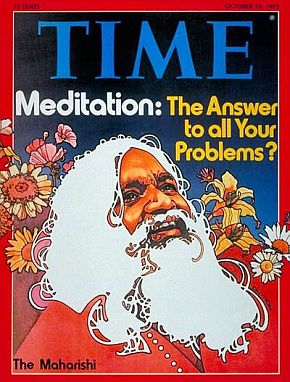 The Beatles and other celebrities, with their travels to India to study TM with the Maharishi Mahesh Yogi, helped bring global attention to him and spawn something of a global enterprise thereafter. He is depicted here on the October 13th, 1975 cover of Time magazine with the story, “Meditation: The Answer to All Your Problems.” |
Steve Turner, A Hard Day’s Write: The Stories Behind Every Beatles Song, New York: Harper Paperbacks, updated edition, 2005.
Allan Kozinn, “Meditation on the Man Who Saved the Beatles,” New York Times, February 7, 2008. p. E-1.
“The Beatles & Maharishi,” Snuh.LiveJournal .com, Viewed, July 2009.
Richie Unterberger, “Dear Prudence,” Song Review, AllMusic.com.
“Dear Prudence,” BeatlesBible.com
“Dear Prudence,” Wikipedia.org.
Paul Saltzman (photographer), Beatles in Rishikesh, Featuring 75 photos and anecdotes on the Beatles and others at the retreat, Penguin Studio Books (hardback), October 2000, 144pp.
Paul Saltzman, “With the Beatles in India,” BeatlesAgain.com, 2006.
“The Beatles in India,” A Photo Collection, Child of The Moon, Blogspot.com, Viewed, July 2009.
“The White Album,” Wikipedia.org.
Ian MacDonald, Revolution in the Head: The Beatles’ Records and the Sixties (2nd Revised Edition, London: Pimlico (Rand). 2005, pp. 310-311.
Sara Rimer, “The Beatles and Youth At Auction,” New York Times, Sunday, June 28, 1987.
Mark Lewisohn, The Beatles Recording Sessions, New York: Harmony Books, 1988, p. 152.
James Wolcot, Blog, “A Bliss Before Dying,” Vanity Fair, February 6, 2008.
Charles Reid, “Ravi Shankar and …The Beatles Put the Sitar on the ‘Pop’ Map Overnight,” The New York Times Magazine, May 7, 1967.
Sydney Gruson, “Beatles Put Off India Pilgrimage; TV Special Gets Nod Over Discipleship in Meditation,” New York Times, September 11, 1967, p. 53.
Associated Press, “Mia Farrow Plans Meditation in India,” New York Times, October 5, 1967.
“The Prophet the Beatles Follow Is Without Honor in His Own Country,” Washington Post, Times Herald, November 4, 1967, p. A-7.
“India Mystic Delivers Peace – For a Price; Guru Counts The Beatles Among His Disciples, Expects Them Next Year,” Los Angeles Times, December 15, 1967, p. A-1.
Barney Lefferts, “Chief Guru of the Western World; Maharishi Mahesh Yogi, Who Numbers the Likes of Shirley Maclaine, Mia Farrow and the Beatles Among His Followers…,”The New York Times Magazine, December 17, 1967.
Joseph Lelyveld, “Beatles’ Guru Is Turning Them Into Gurus With a Cram Course,” New York Times, February 23, 1968, p. 13.
William F. Buckley, Jr., “The Guru or the Gospel?,” Los Angeles Times, March 1, 1968, p. A-5.
“Beatles Cable For British Food,” Washington Post, Times Herald, March 5, 1968, p. A-13.
Dan L. Thrapp, “Bishop Pike, Beatles Cited; Noted Cleric Criticizes Resurgence of Spiritism,” Los Angeles Times, March 7, 1968, p. B-6.
William F. Buckley, Jr., “The Beatles & the Guru,” National Review, March 12, 1968.
Dan L. Thrapp, “New Beliefs Traced to Faith Crisis; Christianity Lags, So Men Turn to Yogi, Cleric Says…,” Los Angeles Times, March 24, 1968, p. L-4.
Cover Story, “Here’s The Scene: The Beatles, Mia Farrow and a Post Reporter All Gather in India to Meditate with The Maharishi Mahesh Yogi,” Inside: “There Once Was a Guru from Rishikesh (Part 1),” Saturday Evening Post, May 4, 1968.
“There Once Was a Guru From Rishikesh (Part 2),” Saturday Evening Post, May 18, 1968.
“Yogi’s Posters Are Taken Down,” Washington Post, Times Herald, May 20, 1968, p. A-14.
“India Gives Culture, Gets Dollars,” New York Times, July 31, 1968, p. 43.
“The Beatles in India,” Wikipedia.org.
“Maharishi Mahesh Yogi,” The Beatles Bible.
Patricia Sullivan, “Maharishi Mahesh Yogi; Was Meditation Guru to the Beatles,” Washington Post, February 7, 2008.
“The White Album,” BeatlesInterviews.org.
Jewish World Features/The Forward, “Jewish Photographer Henry Grossman’s Unique Eye on the Beatles: Photographer Shot Thousands of Photos of the Fab Four During Five-year Run,” Haaretz.com, March 7, 2013.